FOSDEM 2020 is over for this time and I had an awesome time in Brussels once again.
Stickers

I brought a huge collection of stickers this year and I kept going back to the wolfSSL stand to refill the stash and it kept being emptied almost as fast. Hundreds of curl stickers were given away! The photo on the right shows my “sticker bag” as it looked before I left Sweden.
Lesson for next year: bring a larger amount of stickers! If you missed out on curl stickers, get in touch and I’ll do my best to satisfy your needs.
The talk
“HTTP/3 for everyone” was my single talk this FOSDEM. Just two days before the talk, I landed updated commits in curl’s git master branch for doing HTTP/3 up-to-date with the latest draft (-25). Very timely and I got to update the slide mentioning this.
As I talked HTTP/3 already last year in the Mozilla devroom, I also made sure to go through the slides I used then to compare and make sure I wouldn’t do too much of the same talk. But lots of things have changed and most of the content is updated and different this time around. Last year, literally hundreds of people were lining up outside wanting to get into room when the doors were closed. This year, I talked in the room Janson, which features 1415 seats. The biggest one on campus. It was pack full!
It is kind of an adrenaline rush to stand in front of such a wall of people. At one time in my talk I paused for a brief moment and then I felt I could almost hear the complete silence when a huge amount of attentive faces captured what I had to say.
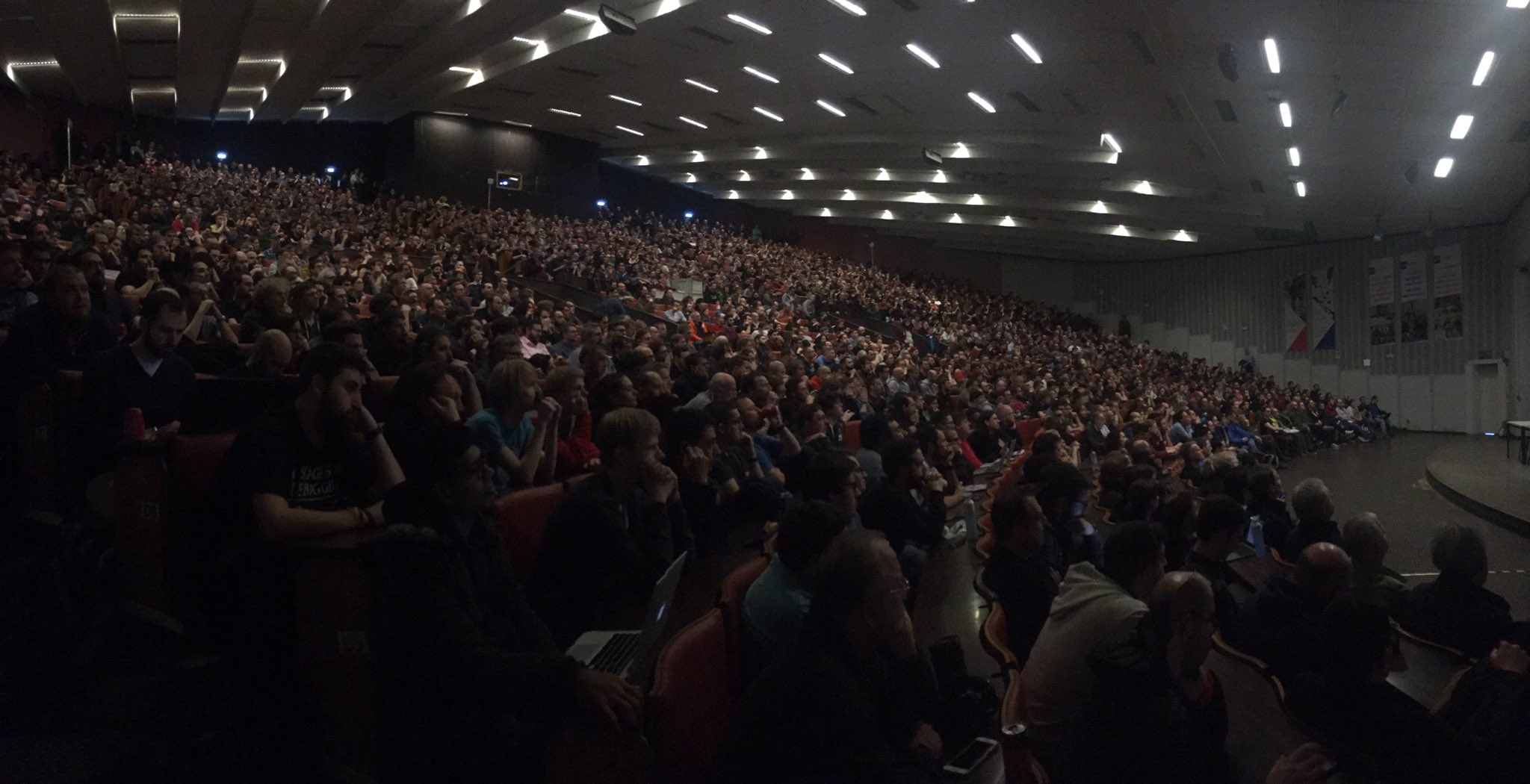
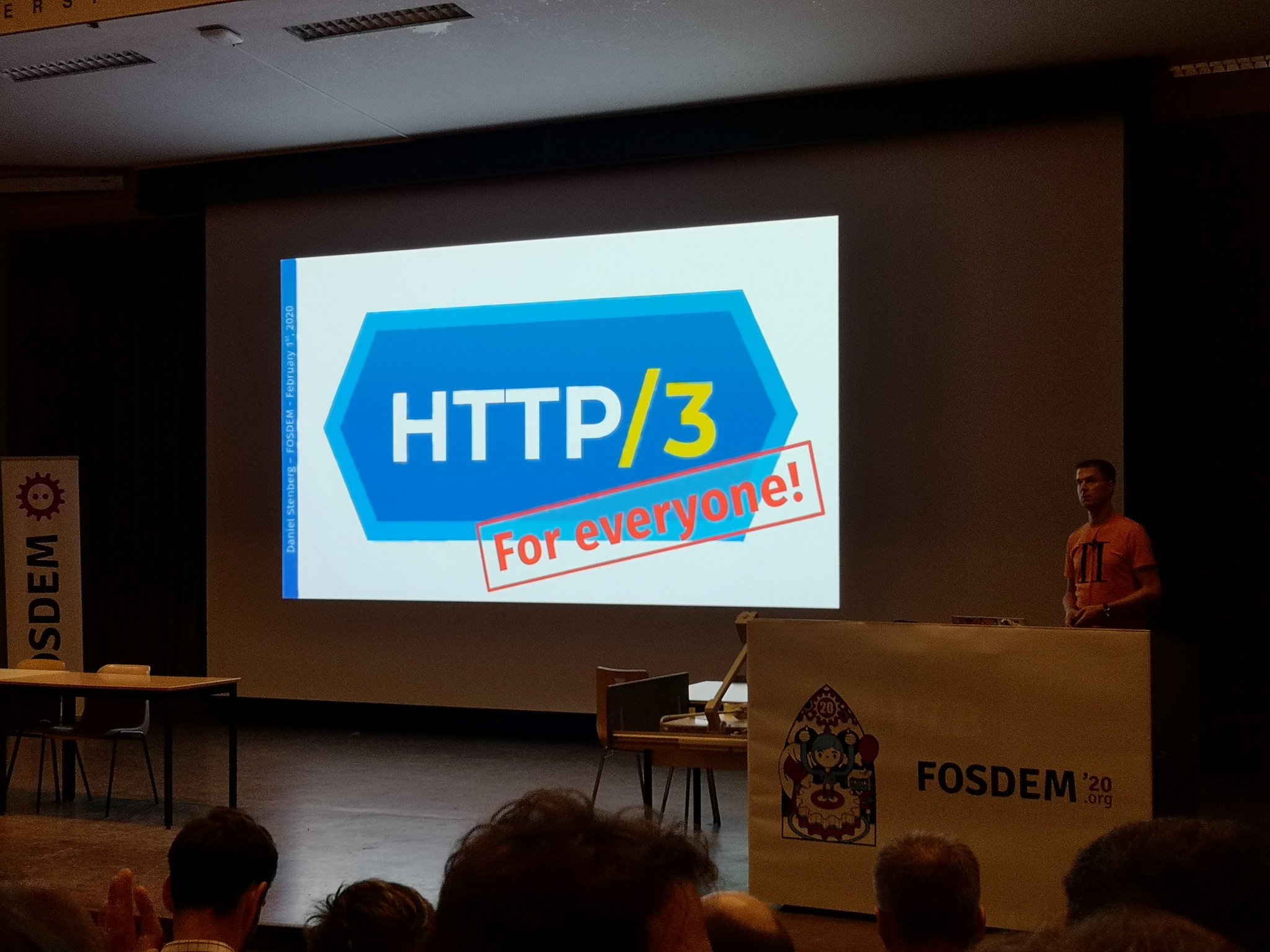
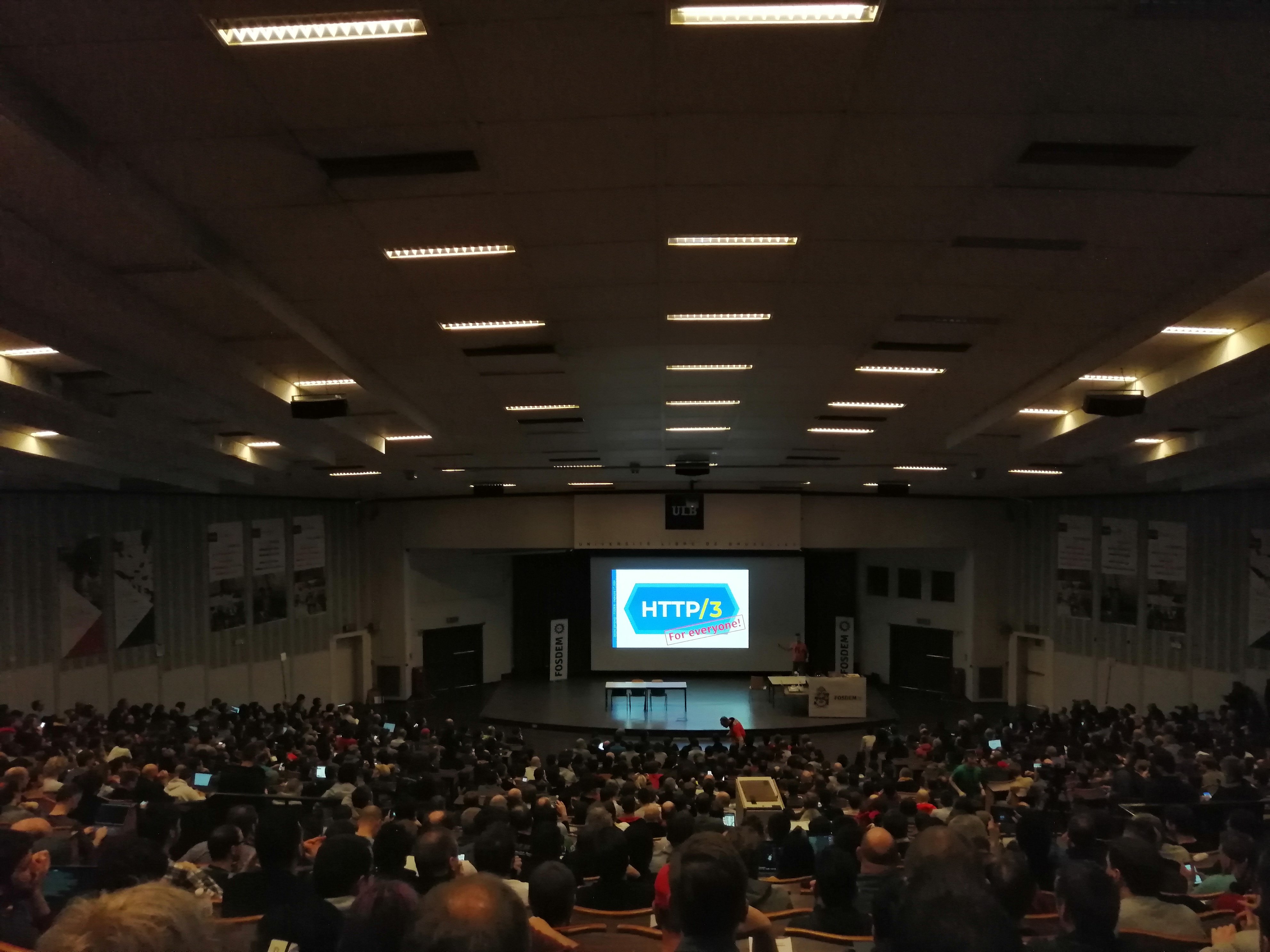
I got a lot of positive feedback on the presentation. I also thought that my decision to not even try to take question in the big room was a correct and I ended up talking and discussing details behind the scene for a good while after my talk was done. Really fun!
The video
The video is also available from the FOSDEM site in webm and mp4 formats.
The slides
If you want the slides only, run over to slideshare and view them.
In Tracking Diaries, we invited people from all walks of life to share how they spent a day online while using Firefox’s privacy protections to keep count of the trackers … Read more
The post Tracking Diaries with Melanie Ehrenkranz appeared first on The Firefox Frontier.
https://blog.mozilla.org/firefox/tracking-diaries-melanie-ehrenkranz/
A new decade has started, and we are excited about the Rust conferences coming up. Each conference is an opportunity to learn about Rust, share your knowledge, and to have a good time with your fellow Rustaceans. Read on to learn more about the events we know about so far.
FOSDEM
February 2nd, 2020
FOSDEM stands for the Free and Open Source Developers European Meeting. At this event software developers around the world will meet up, share ideas and collaborate. FOSDEM will be hosting a Rust devroom workshop that aims to present the features and possibilities offered by Rust, as well as some of the many exciting tools and projects in its ecosystem.
Located in Brussels, BelgiumRustFest Netherlands
Q2, 2020
The RustFest Netherlands team are working hard behind the scenes on getting everything ready. We hope to tell you more soon so keep an eye on the RustFest blog and follow us on Twitter!
Located in NetherlandsRust+GNOME Hackfest
April 29th to May 3rd, 2020
The goal of the Rust+GNOME hackfest is to improve the interactions between Rust and the GNOME libraries. During this hackfest, we will be improving the interoperability between Rust and GNOME, improving the support of GNOME libraries in Rust, and exploring solutions to create GObject APIs from Rust.
Located in Montr'eal, QuebecRust LATAM
May 22nd-23rd, 2020
Where Rust meets Latin America! Rust Latam is Latin America's leading event for and by the Rust community. Two days of interactive sessions, hands-on activities and engaging talks to bring the community together. Schedule to be announced at this link.
Located in Mexico City, MexicoOxidize
July, 2020
The Oxidize conference is about learning, and improving your programming skills with embedded systems and IoT in Rust. The conference plans on having one day of guided workshops for developers looking to start or improve their Embedded Rust skills, one day of talks by community members, and a two day development session focused on Hardware and Embedded subjects in Rust. The starting date is to be announced at a later date.
Located in Berlin, GermanyRustConf
August 20th-21st, 2020
The official RustConf will be taking place in Portland, Oregon, USA. Last years' conference was amazing, and we are excited to see what happens next. See the
Web performance issue — reoccurrence
In June we discovered that Treeherder’s UI slowdowns were due to database slow downs (For full details you can read this post). After a couple of months of investigations, we did various changes to the RDS set up. The changes that made the most significant impact were doubling the DB size to double our IOPS cap and adding Heroku auto-scaling for web nodes. Alternatively, we could have used Provisioned IOPS instead of General SSD storage to double the IOPS but the cost was over $1,000/month more.
Looking back, we made the mistake of not involving AWS from the beginning (I didn’t know we could have used their help). The AWS support team would have looked at the database and would have likely recommended the parameter changes required for a write intensive workload (the changes they recommended during our November outage — see bug 1597136 for details). For the next four months we did not have any issues, however, their help would have saved a lot of time and it would have prevented the major outage we had in November.
There were some good things that came out of these two episodes: the team has learned how to better handle DB issues, there’s improvements we can do to prevent future incidents (see bug 1599095), we created an escalation path and we worked closely as a team to go through the crisis (thanks bobm, camd, dividehex, ekyle, fubar, habib, kthiessen & sclements for your help!).
The Rust team is happy to announce a new version of Rust, 1.41.0. Rust is a programming language that is empowering everyone to build reliable and efficient software.
If you have a previous version of Rust installed via rustup, getting Rust 1.41.0 is as easy as:
rustup update stable
If you don't have it already, you can get rustup from the
appropriate page on our website, and check out the detailed release notes for
1.41.0 on GitHub.
What's in 1.41.0 stable
The highlights of Rust 1.41.0 include relaxed restrictions for trait
implementations, improvements to cargo install, a more git-friendly
Cargo.lock, and new FFI-related guarantees for Box. See the detailed
release notes to learn about other changes not covered by this post.
Relaxed restrictions when implementing traits
To prevent breakages in the ecosystem when a dependency adds a new trait
impl, Rust enforces the orphan rule. The gist of it is that
a trait impl is only allowed if either the trait or the type being
implemented is local to (defined in) the current crate as opposed to a
foreign crate. What this means exactly is complicated, however,
when generics are involved.
Before Rust 1.41.0, the orphan rule was unnecessarily strict, getting in the
way of composition. As an example, suppose your crate defines the
BetterVec struct, and you want a way to convert your struct to the
standard library's Vec. The code you would write is:
impl From> for Vec {
    // ...
}
...which is an instance of the pattern:
impl ForeignTrait for ForeignType {
    // ...
}
In Rust 1.40.0 this impl was forbidden by the orphan rule, as both From and
Vec are defined in the standard library, which is foreign to the current
crate. There were ways to work around the limitation, such as the newtype
pattern, but they were often cumbersome or even impossible in
some cases.
While it's still true that both From and Vec were foreign, the trait (in
this case From) was parameterized by a local type. Therefore, Rust 1.41.0
allows this impl.
For more details, read the the stabilization report and the RFC proposing the change.
cargo install updates packages when outdated
With cargo install, you can install binary crates in your system. The command
is often used by the community to install popular CLI tools written in Rust.
Starting from Rust 1.41.0, cargo install will also update existing
installations of the crate if a new release came out since you installed it.
Before this release the only option was to pass the --force flag, which
reinstalls the binary crate even if it's up to date.
Less conflict-prone Cargo.lock format
To ensure consistent builds, Cargo uses a file named Cargo.lock, containing
dependency versions and checksums. Unfortunately, the way the data was arranged
in it caused unnecessary merge conflicts when changing dependencies in separate
branches.
Rust 1.41.0 introduces a new format
Monday
Some webcompat diagnosis. Nothing exciting in the issues found, except maybe something about clipping and scrolling. Update: there is a bug! Thanks Daniel
Tuesday
scoping request to the webhook to the actual repo. That way we do not do useless work or worse conflicts of labels assignments. I struggled a bit with the mock Basically for the test I wanted to avoid to make the call to GitHub. When I think about it, there are possibly two options:
- Mocking.
- or putting a flag in the code to avoid the call if in test environment. Not sure what is the best strategy.
I also separated some tests which were tied together under the same function, so that it is clearer when one of them is failing.
Phone meeting with the webcompat team this night from 23:00 to midnight. Minutes.
About Mocking
Yes mocking is evil in unit tests, but it becomes necessary if you have dependencies on external services (that you do not control). A good reminder is that you need to mock the function where it is actually called and not where it is imported from. In my case, I wanted to make a couple of tests for our webhook without actually sending requests to GitHub. The HTTP response from GitHub which interests us would be either:
- 4**
- 200
So I created a mock for the case where it is successful and makes actually the call. I added comments here to explain.
    @patch('webcompat.webhooks.new_opened_issue')
    def test_new_issue_right_repo(self, mock_proxy):
        """Test that repository_url matches the CONFIG for public repo.
        Success is:
        payload: 'gracias amigos'
        status: 200
        content-type: text/plain
        """
        json_event, signature = event_data('new_event_valid.json')
        headers = {
            'X-GitHub-Event': 'issues',
            'X-Hub-Signature': 'sha1=2fd56e551f8243a4c8094239916131535051f74b',
        }
        with webcompat.app.test_client() as c:
            mock_proxy.return_value.status_code = 200
            rv = c.post(
                '/webhooks/labeler',
                data=json_event,
                headers=headers
            )
            self.assertEqual(rv.data, b'gracias, amigo.')
            self.assertEqual(rv.status_code, 200)
            self.assertEqual(rv.content_type, 'text/plain')
Wednesday
Asia Dev Roadshow
Sandra has published the summary and the videos of the Developer Roadshow in Asia. This is the talk we gave about Web Compatibility and devtools in Seoul.
Anonymous reporting
As of today, the Thunderbird project will be operating from a new wholly owned subsidiary of the Mozilla Foundation, MZLA Technologies Corporation. This move has been in the works for a while as Thunderbird has grown in donations, staff, and aspirations. This will not impact Thunderbird’s day-to-day activities or mission: Thunderbird will still remain free and open source, with the same release schedule and people driving the project.
There was a time when Thunderbird’s future was uncertain, and it was unclear what was going to happen to the project after it was decided Mozilla Corporation would no longer support it. But in recent years donations from Thunderbird users have allowed the project to grow and flourish organically within the Mozilla Foundation. Now, to ensure future operational success, following months of planning, we are forging a new path forward. Moving to MZLA Technologies Corporation will not only allow the Thunderbird project more flexibility and agility, but will also allow us to explore offering our users products and services that were not possible under the Mozilla Foundation. The move will allow the project to collect revenue through partnerships and non-charitable donations, which in turn can be used to cover the costs of new products and services.
Thunderbird’s focus isn’t going to change. We remain committed to creating amazing, open source technology focused on open standards, user privacy, and productive communication. The Thunderbird Council continues to steward the project, and the team guiding Thunderbird’s development remains the same.
Ultimately, this move to MZLA Technologies Corporation allows the Thunderbird project to hire more easily, act more swiftly, and pursue ideas that were previously not possible. More information about the future direction of Thunderbird will be shared in the coming months.
Update: A few of you have asked how to make a contribution to Thunderbird under the new corporation, especially when using the monthly option. Please check out our updated site at give.thunderbird.net!
At Mozilla, we often speak of our contributor communities with gratitude, pride and even awe. Our mission and products have been supported by a broad, ever-changing rebel alliance — full of individual volunteers and organizational contributors — since we shipped Firefox 1.0 in 2004. It is this alliance that comes up with new ideas, innovative approaches and alternatives to the ongoing trends towards centralisation and an internet that doesn’t always work in the interests of people.

But we’ve been unable to speak in specifics. And that’s a problem, because the threats to the internet we love have never been greater. Without knowing the strength of the various groups fighting for a healthier internet, it’s hard to predict or achieve success.
We know there are thousands around the globe who help build, localize, test, de-bug, deploy, and support our products and services. They help us advocate for better government regulation and ‘document the web’ through the Mozilla Developer Network. They speak about Mozilla’s mission and privacy-preserving products and technologies at conferences around the globe. They help us host events around the globe too, like this year’s 10th anniversary of MozFest, where participants hacked on how to create a multi-lingual, equitable internet and so much more.
With the publication of the Mozilla and the Rebel Alliance report, we can now speak in specifics. And what we have to say is inspiring. As we rise to the challenges of today’s internet, from the injustices of the surveillance economy to widespread misinformation and the rise of untrustworthy AI, we take heart in how powerful we are as a collective.
Making the connections
In 2018, well over 14,000 people supported Mozilla by contributing their expertise, work, creativity, and insights. Between 2017 and 2019, more than 12,000 people contributed to Firefox. These counts only consider those people whose contributions we can see, such as through Bugzilla, GitHub, or Kitsune, our support platform. They don’t include non-digital contributions. Firefox and Gecko added almost 3,500 new contributors in 2018. The Mozilla Developer Network added over 1,000 in 2018. 52% of all traceable contributions in 2018 came from individual volunteers and commercial contributors, not employees.

Firefox Community Health
The report’s network graphs demonstrate that there are numerous Mozilla communities, not one. Many community members participate across multiple projects: core contributors participate in an average of 4.3 of them. Our friends at Analyse & Tal helped create an interactive version of Mozilla’s contributor communities, highlighting common patterns of contribution and distinguishing between levels of contribution by project. Also, it’s important to note what isn’t captured in the report: the value of social connections, the learning and the mutual support people find in our communities.
We can make a reasonable estimate of the discrete value of some contributions from our rebel alliance. For example, community contributions comprise 58% of all filed Firefox regression bugs, which are particularly costly in their impact on the number of people who use and keep using the browser.
But the real value in our rebel alliance and their contributions is in how they inform and amplify our voice. The challenges around the state of the internet are daunting: disinformation, algorithmic bias and discrimination, the surveillance economy and greater centralisation. We believe this report shows that with the creative strength of our diverse contributor communities, we’re up for the fight.
If you’d like to contribute yourself: check out various opportunities here or dive right into one of our Activate Campaigns!)
For Firefox products and services to meet the needs of people’s increasingly complex online lives, we need the right organizational structure. One that allows us to respond quickly as we continue to excel at delivering existing products and develop new ones into the future.
Today, I announced a series of changes to the Firefox Product Development organization that will allow us to do just that, including the promotion of long-time Mozillian Selena Deckelmann to Vice President, Firefox Desktop.
“Working on Firefox is a dream come true,” said Selena Deckelmann, Vice President, Firefox Desktop. “I collaborate with an inspiring and incredibly talented team, on a product whose mission drives me to do my best work. We are all here to make the internet work for the people it serves.”
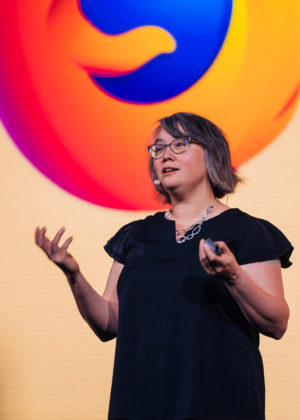
Selena Deckelmann, VP Firefox Desktop
During her eight years with Mozilla, Selena has been instrumental in helping the Firefox team address over a decade of technical debt, beginning with transitioning all of our build infrastructure over from Buildbot. As Director of Security and then Senior Director, Firefox Runtime, Selena led her team to some of our biggest successes, ranging from big infrastructure projects like Quantum Flow and Project Fission to key features like Enhanced Tracking Protection and new services like Firefox Monitor. In her new role, Selena will be responsible for growth of the Firefox Desktop product and search business.
Rounding out the rest of the Firefox Product Development leadership team are:
Joe Hildebrand, who moves from Vice President, Firefox Engineering into the role of Vice President, Firefox Web Technology. He will lead the team charged with defining and shipping our vision for the web platform.
James Keller who currently serves as Senior Director, Firefox User Experience will help us better navigate the difficult trade-off between empowering teams while maintaining a consistent user journey. This work is critically important because since the Firefox Quantum launch in November 2017 we have been focused on putting the user back at the center of our products and services. That begins with a coherent, engaging and easy to navigate experience in the product.
I’m extraordinarily proud to have such a strong team within the Firefox organization that we could look internally to identify this new leadership team.
These Mozillians and I, will eventually be joined by two additional team members. One who will head up our Firefox Mobile team and the other who will lead the team that has been driving our paid subscription work. Searches for both roles will be posted.
Alongside Firefox Chief Technology Officer Eric Rescorla and Vice President, Product Marketing Lindsey Shepard, I look forward to working with this team to meet Mozilla’s mission and serve internet users as we build a better web.
You can download Firefox here.
The post Firefox Team Looks Within to Lead Into the Future appeared first on The Mozilla Blog.
https://blog.mozilla.org/blog/2020/01/24/firefox-team-looks-within-to-lead-into-the-future/
I’m going to FOSDEM again in 2020, this will be my 11th consecutive year I’m travling to this awesome conference in Brussels, Belgium.
At this my 11th FOSDEM visit I will also deliver my 11th FOSDEM talk: “HTTP/3 for everyone“. It will happen at 16:00 Saturday the 1st of February 2020, in Janson, the largest room on the campus. (My third talk in the main track.)
For those who have seen me talk about HTTP/3 before, this talk will certainly have overlaps but I’m also always refreshing and improving slides and I update them as the process moves on, things changes and I get feedback. I spoke about HTTP/3 already at FODEM 2019 in the Mozilla devroom (at which time there was a looong line of people who tried, but couldn’t get a seat in the room) – but I think you’ll find that there’s enough changes and improvements in this talk to keep you entertained this year as well!
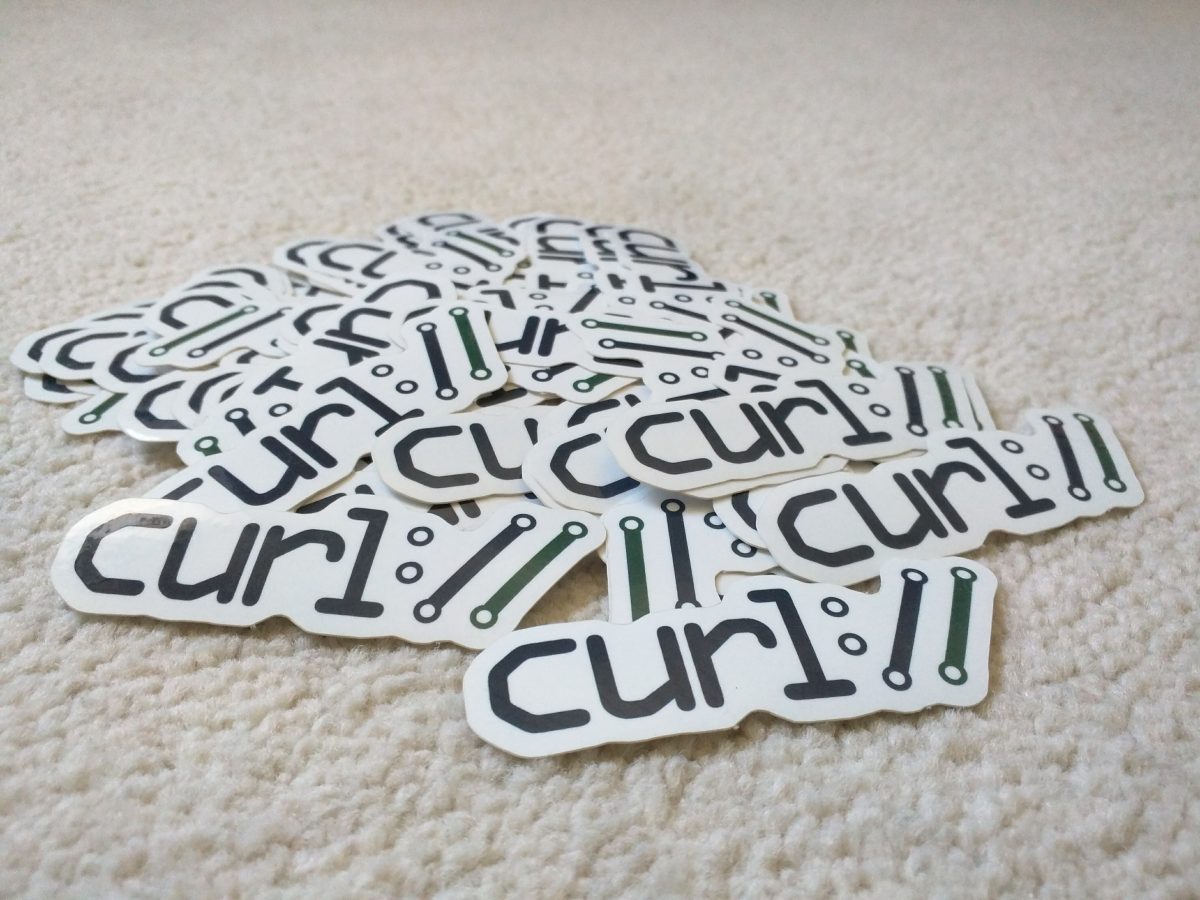
If you come to FOSDEM, don’t hesitate to come say hi and grab a curl sticker or two – I intend to bring and distribute plenty – and talk curl, HTTP and Internet transfers with me!
You will most likely find me at my talk, in the cafeteria area or at the wolfSSL stall. (DM me on twitter to pin me down! @bagder)
https://daniel.haxx.se/blog/2020/01/24/coming-to-fosdem-2020/
While pruning features from our product it was necessary to fully remove some Django apps that had models in them. If the code is just removed than the tables (and some other references) will be left in the database.
After doing this a few times for work I came up …
https://patrick.cloke.us/posts/2020/01/23/cleanly-removing-a-django-app-with-models/
While attempting to improve performance of bulk inserting data into MySQL database my coworker came across the LOAD DATA SQL statement. It allows you to read data from a text file (in a comma separated variable-like format) and quickly insert it into a table. There’s two variations of it …
https://patrick.cloke.us/posts/2020/01/23/using-mysqls-load-data-with-django/
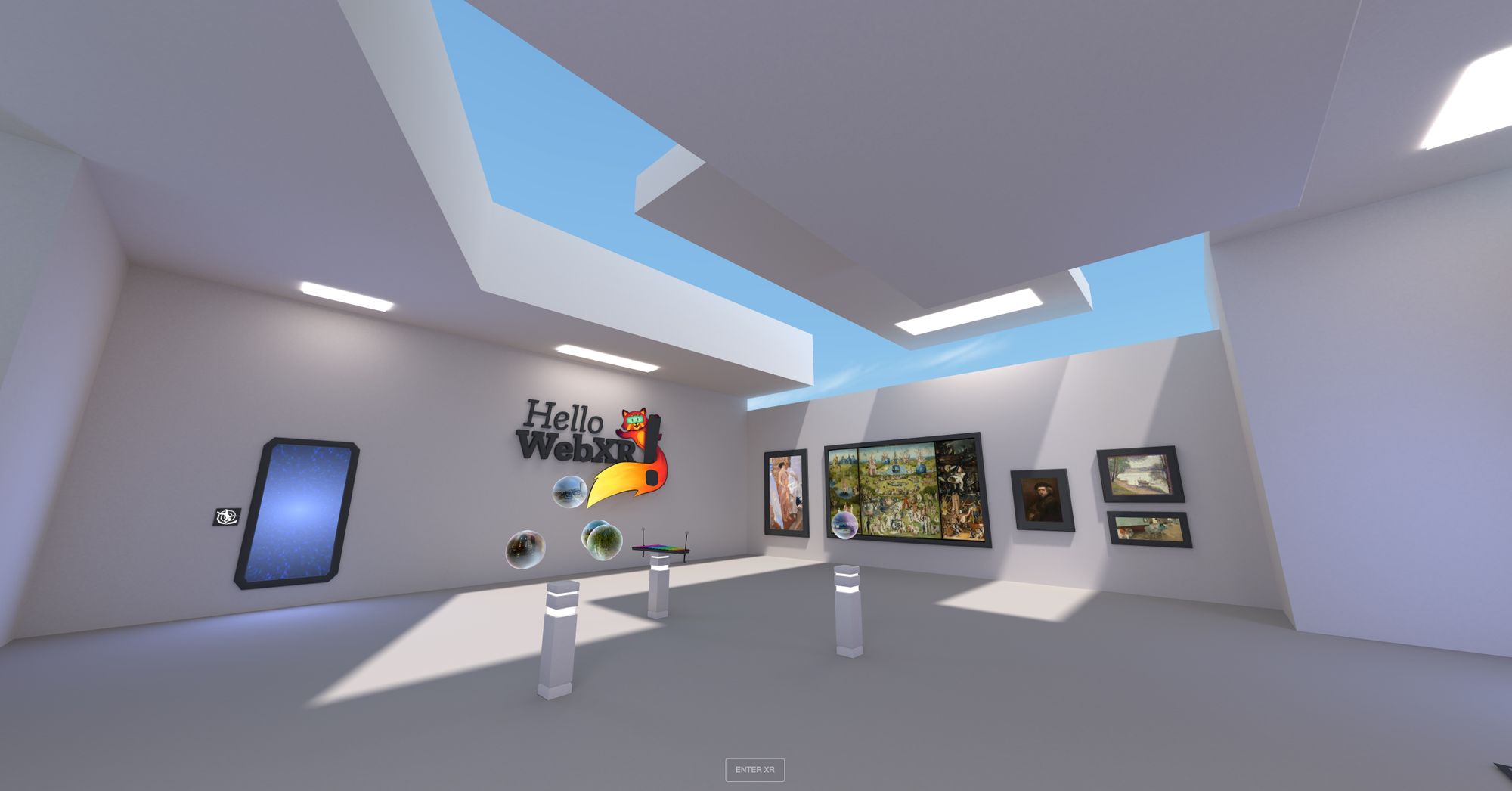
We are happy to share a brand new WebXR experience we have been working on called Hello WebXR!
Here is a preview video of how it looks:
We wanted to create a demo to celebrate the release of the WebXR v1.0 API!.
The demo is designed as a playground where you can try different experiences and interactions in VR, and introduce newcomers to the VR world and its special language in a smooth, easy and nice way.
How to run it
You just need to open the Hello WebXR page on a WebXR (Or WebVR thanks to the WebXR polyfill) capable browser like Firefox Reality or Oculus Browser on standalone devices such as the Oculus Quest, or with Chrome on Desktop >79. For an updated list of supported browsers please visit the ImmersiveWeb.dev support table.
Features
- The demo starts in the main hall where you can find:
- Floating spheres containing 360o mono and stereo panoramas
- A pair of sticks that you can grab to play the xylophone
- A painting exhibition where paintings can be zoomed and inspected at will
- A wall where you can use a graffiti spray can to paint whatever you want
- A twitter feed panel where you can read tweets with hashtag #hellowebxr
- Three doors that will teleport you to other locations:
- A dark room to experience positional audio (can you find where the sounds come from?)
- A room displaying a classical sculpture captured using photogrammetry
- The top of a building in a skyscrapers area (are you scared of heights?)
Goals
Our main goal for this demo was to build a nice looking and nice performing experience where you could try different interactions and explore multiple use cases for WebXR. We used Quest as our target device to demonstrate WebXR is a perfectly viable platform not only for powerful desktops and headsets but also for more humble devices like the Quest or Go, where resources are scarce.
Also, by building real-world examples we learn how web technologies, tools, and processes can be optimized and improved, helping us to focus on implementing actual, useful solutions that can bring more developers and content to WebXR.
Tech
The demo was built using web technologies, using the three.js engine and our ECSY framework in some parts. We also used the latest standards such as glTF with Draco compression for models and Basis for textures. The models were created using Blender, and baked lighting is used throughout all the demo.
We also used third party content like the photogrammetry sculpture (from this fantastic scan by Geoffrey Marchal in Sketchfab), public domain sounds from freesound.org and classic paintings are taken from the public online galleries of the museums where they are exhibited.
Conclusions
There are many things we are happy with:
- The overall aesthetic and “gameplay” fits perfectly with the initial concepts.
- The way we handle the different interactions in the same room, based on proximity or states made everything easier to scale.
- The demo was created initially using only Three.js, but we successfully integrated some functionality using ECSY.
And other things that we could improve:
- We released fewer experiences than we initially planned.
- Overall the tooling is still a bit rough and we need to keep on improving it:
- When something goes wrong it is hard to debug remotely on the device. This is even worse if the problem comes
There’s a good chance you’re reading this on a phone, which is not surprising considering that most of us spend up to four hours a day on our phones. And … Read more
The post Data detox: Five ways to reset your relationship with your phone appeared first on The Firefox Frontier.
It’s been a long time since I’ve wanted to write deeply about my work empowering communities. I want to start with this article sharing some high-level learnings around working on community strategy.
Hi, I’m Rub'en Mart'in and I work as a Community Strategist for Mozilla, the non-profit behind Firefox Browser.
I’ve been working with, and participating in open/libre source communities since 2004 – the first decade as a volunteer before making open source my full time career – joining Mozilla as staff five years ago, where as part of my Community Strategist role I’ve been focused on:
- Identifying and designing opportunities for generating organizational impact through participation of volunteer communities.
- Design open processes for collaboration that provide a nice, empowering and rich experience for contributors.
During these many years, I have witnessed incredible change in how communities engage, grow and thrive in the open source ecosystem and beyond, and ‘community’ has become a term more broadly implicated in product marketing and its success in many organizations. At Mozilla our community strategy, while remaining dedicated to the success of projects and people, has been fundamentally modernized and optimized to unlock the true potential of a Mission-Driven Organization by:
- Prioritizing data, or what I refer to as ‘humanizing the data-driven approach’
- Implementing our Open By Design strategy.
- Investing into our contributor experience holistically.
Today Mozilla’s communities are a powerhouse of innovation, unlocking much more impact to different areas of the organization, like the Common Voice 2019 Campaign where we collected 406 hours of public domain voices for unlocking the speech-to-text market or the Firefox Preview Bug Hunter Campaign with more than 500 issues filed and 8000 installs in just two weeks that were fundamental to launch this browser to the market sooner.
Follow me during this post to know how we got there.
The roots, how did we get here?

Mozilla has grown from a small community of volunteers and a few employees, to an organization with 1200+ employees and tens of thousands of volunteers around the world. You can imagine that Mozilla and its needs in 2004 were completely different to the current ones.
Communities were created and organized organically for a long time here at Mozilla. Anyone with the time and energy to mobilize a local community created one and tried to provide value to the organization, usually through product localization or helping with user support.
I like a quote from my college Rosana Ardila who long ago said that contributing opportunities at Mozilla were a “free buffet” where anyone could jump into anything with no particular order of importance and where many of the dishes were long empty. We needed to “refill” the buffet.
This is how usually a lot of libre and open source communities operate, being open by default with a ton of entry points to contribute, unfortunately some or most of them not really fully optimized for contributions and therefore don’t offer a great contribution experience.
Impact and humanizing the data-driven approach

Focusing on impact and at the same time humanizing the data-driven approach were a couple of
As outlined in two previous posts, we believe that the sale of the nonprofit Public Interest Registry (PIR) to Ethos Capital demands close and careful scrutiny. ICANN — the body that granted the dot org license to PIR and which must approve the sale — needs to engage in this kind of scrutiny.
When ICANN’s board meets in Los Angeles over the next few days, we urge directors to pay particular attention to the question of how the new PIR would steward and be accountable to the dot org ecosystem. We also encourage them to seriously consider the analysis and arguments being made by those who are proposing alternatives to the sale, including the members of the Cooperative Corporation of .ORG Registrants.
As we’ve said before, there are high stakes behind this sale: Public interest groups around the world rely on the dot org registrar to ensure free expression protections and affordable digital real estate. Should this reliance fail under future ownership, a key part of the public interest internet infrastructure would be diminished — and so would the important offline work it fuels.
Late last year, we asked ISOC, PIR and Ethos to answer a series of questions about how the dot org ecosystem would be protected if the sale went through. They responded and we appreciate their engagement, but key questions remain unanswered.
In particular, the responses from Ethos and ISOC proposed a PIR stewardship council made up of representatives from the dot org community. However, no details about the structure, role or powers of this council have been shared publicly. Similarly, Ethos has promised to change PIR’s corporate structure to reinforce its public benefit orientation, but provided few details.
Ambiguous promises are not nearly enough given the stakes. A crystal-clear stewardship charter — and a chance to discuss and debate its contents — are needed before ICANN and the dot org community can even begin to consider whether the sale is a good idea.
One can imagine a charter that provides the council with broad scope, meaningful independence, and practical authority to ensure PIR continues to serve the public benefit. One that guarantees Ethos and PIR will keep their promises regarding price increases, and steer any additional revenue from higher prices back into the dot org ecosystem. One that enshrines quality service and strong rights safeguards for all dot orgs. And one that helps ensure these protections are durable, accounting for the possibility of a future resale.
At the ICANN board meeting tomorrow, directors should discuss and agree upon a set of criteria that would need to be satisfied before approving the sale. First and foremost, this list should include a stewardship charter of this nature, a B corp registration with a publicly posted charter, and a public process of feedback related to both. These things should be in place before ICANN considers approving the sale.
ICANN directors should also discuss whether alternatives to the current sale should be considered, including an open call for bidders. Internet stalwarts like Wikimedia, experts like Marietje Schaake and dozens of important non-profits have proposed other options, including the creation of a co-op of dot orgs. In a Washington Post op-ed, former ICANN chair Esther Dyson argues that such a co-op would “[keep] dot-org safe, secure and free of any motivation to profit off its users’ data or to upsell them pricy add-ons.”
Throughout this process, Mozilla will continue to ask tough questions, as we have on December 3 and December 19. And we’ll continue to push ICANN to hold the sale up against a high bar.
The post ICANN Directors: Take a Close Look at the Dot Org Sale appeared first on The Mozilla Blog.
https://blog.mozilla.org/blog/2020/01/23/icann-directors-take-a-close-look-at-the-dot-org-sale/
After the holiday break we are back with a slightly belated update on extensions in Firefox 72. Firefox releases are changing to a four week cycle, so you may notice these posts getting a bit shorter. Nevertheless, I am excited about the changes that have made it into Firefox 72.
Welcome to the (network) party
Firefox determines if a network request is considered third party and will now expose this information in the webRequest listeners, as well as the proxy onRequest listener. You will see a new thirdParty property. This information can be used by content blockers as an additional factor to determine if a request needs to be blocked.
Doubling down on security
On the road to Manifest v3, we also recently announced the possibility to test our new content security policy for content scripts. The linked blog post will fill you in on all the information you need to determine if this change will affect you.
More click metadata for browser- and pageActions
If your add-on has a browserAction or pageAction button, you can now provide additional ways for users to interact with them. We’ve added metadata information to the onClicked listener, specifically the keyboard modifier that was active and a way to differentiate between a left click or a middle click. When making use of these features in your add-on, keep in mind that not all users are accustomed to using keyboard modifiers or different mouse buttons when clicking on icons. You may need to guide your users through the new feature, or consider it a power-user feature.
Changing storage.local using the developer tools
In Firefox 70 we reported that the storage inspector will be able to show keys from browser.storage.local. Initially the data was read-only, but since Firefox 72 we also have limited write support. We hope this will allow you to better debug your add-ons.
Miscellaneous
- The captivePortal API now provides access to the canonicalURL property. This URL is requested to detect the captive portal state and defaults to
http://detectportal.firefox.com/success.txt - The browserSettings API now supports the onChange listener, allowing you to react accordingly if browser features have changed.
- Extension files with the .mjs extension, commonly used with ES6 modules, will now correctly load. You may come across this when using script tags, for example.
A shout out goes to contributors M'elanie Chauvel, Trishul Goel, Myeongjun Go, Graham McKnight and Tom Schuster for fixing bugs in this version of Firefox. Also we’ve received a patch from James Jahns from the MSU Capstone project. I would also like to thank the numerous staff members from different corners of Mozilla who have helped to make extensions in Firefox 72 a success. Kudos to all of you!
People can’t be expected to understand all of the technically complex ways their online behavior is tracked by hidden entities. As you casually surf the web, there are countless techniques … Read more
The post Firefox Extension Spotlight: Privacy Badger appeared first on The Firefox Frontier.
https://blog.mozilla.org/firefox/firefox-extension-privacy-badger/