US threatened to shoot down Russian planes
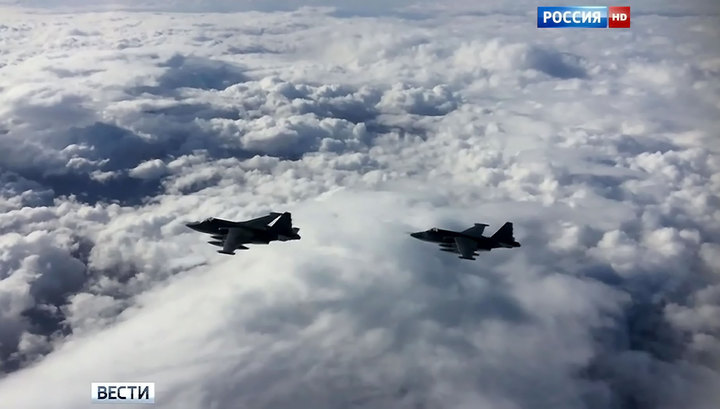
The US began to worry about this on the background of "unsafe behavior" of the Russian military, RT reports . "Most of all, we worry that we can bring down a Russian plane, because the actions of Russian aviation can threaten our air or land forces," Lieutenant Colonel Damien Picart, an official spokesman for the US Air Force Central Command, said. According to him, the leaders of the Western coalition have repeatedly noted that they are in Syria for the sake of fighting against the IG (a terrorist group, banned in Russia), "not with the Russians or someone else."
Earlier, the Pentagon accused Russia and the Syrian military of violating their aircraft agreements, reached by Washington and Moscow in order to prevent various incidents.
During the APEC summit in Vietnam, the Russian president Vladimir Putin and his American counterpart Donald Trump said that they "agreed to support military channels of communication in order to ensure the security of both the US and Russian forces ... in the fight against the IG ."
It was noted that the parties also identified areas where Russian and American aircraft will operate. The events in Syria developed in such a way that the border between the Russian and American zones passed through the Euphrates. Forces supported by the United States operate east of this river, and Russian and Syrian military forces are to the west.
Recently, however, the Russian Defense Ministry stated that Russian planesbegan more active operations east of the Euphrates , which brought them closer to the US military. According to Picart, most of the incidents occur between the Syrian city of Meyadin and the border of the Arab Republic with Iraq, where pro-American "Syrian democratic forces" and the Iraqi government are at war with remnants of militants.
Picart also noted that the parties continue to communicate with each other through the hotline, and such contacts are mostly of a professional nature, but the meetings of air crews in the air do not always go according to the agreements. And American pilots, he says, "it is not easy to understand whether the actions of their Russian colleagues were intentional or were the result of a common mistake."