 Born in Split, Croatia in 1968, Maja Vodanovic moved to Montreal at the age of eight. A graduate in Art History from McGill University and also the Concordia School of Fine Arts, she has been exhibiting her work since 1990. Maja has been represented by Galerie Valentin since 1998. In Vodanovic’s recent work each painting is a historical construction, where characters and places, objects and texts evoke real and imaginary events. The motionless images are deliberate syntheses condensing in a two-dimensional frame a temporal perspective. This visual construction of memory is produced by a constant and deliberate work of synthesis performed by our consciousness and our dreams. With this work, we are able to orient ourselves in the chaotic stream of our experience. This fundamental dimension of our existence is represented in the theme as well as in the manner of Vodanovic’s works.
Snjezana
 [182x250] Laurencin was born in Paris where she was raised by her mother and lived much of her life. When she was 18 years old, she studied porcelain painting in Sèvres. She then returned to Paris and continued her art education at Académie Humbert, where she changed her focus to oil on canvas. During the early years of the 20th century, Laurencin was an important figure of the Parisian avant-garde and a member of the circle of Pablo Picasso. She became romantically involved with Picasso's friend, the poet Guillaume Apollinaire and has often been remembered as his muse. In addition, Laurencin had important connections to the literary salon of the American expatriate and famed lesbian writer Natalie Clifford Barney. During the period of the First World War, Laurencin left France for exile in Spain with her German born husband, Baron Otto von Waëtjen (1914), since through her marriage she had automatically lost her French citizenship. The couple subsequently lived together briefly in Düsseldorf. After they divorced in 1920, she returned to Paris, where she lived for the remainder of her life and achieved great success as an artist.
Laurencin's works include paintings, watercolors, drawings, and prints. She is known as one of the few female Cubist painters, with Sonia Delaunay, Marie Vorobieff, and Franciska Clausen. While her work does show the influence of Cubist painters Pablo Picasso and Georges Braque, who was her close friend, she developed a unique approach to abstraction which often centered on the representation of groups of women and female portraits. Further, her work lies outside the bounds of Cubist norms in her pursuit of a specifically feminine aesthetic by her use of pastel colors and curvilinear forms. Laurencin, when painting her tender visions, attempted to reaffirm feminine seduction in the face of victorious modernism. The insistence on the creation of a visual vocabulary of femininity in her art can be seen as a response to what some consider to be the arrogant masculinity of Cubism. Laurencin continued to explore themes of femininity and feminine modes of representation until her death.
In 1983, on the one hundredth anniversary of Laurencin's birth, the Musée Marie Laurencin opened in Nagano Prefecture, Japan. The museum is home to more than 500 of her works and an archive.
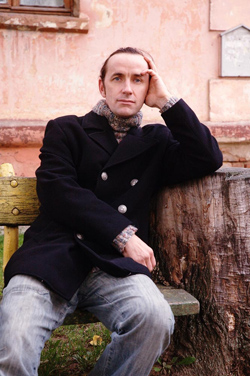 Дата рождения – 19.02.1964 г. Место рождения – г.Гродно (Беларусь) 1980г. -1984г. - учеба в Минском художественном училище им. А.К.Глебова (педагогическое отделение)
1986г.-1991г. – учеба в Минской Академии Искусств (монументально-декоративное отделение)
1991г.-1993г. – работа над церковными фресками в Республике Польша
1996г – член Союза Художников Беларуси
Одуванчики
Ivana Kobilca (1861- 1926) was a Slovene realist painter who lived, worked and studied in various European cities including Vienna, Sarajevo, Berlin, Paris and Munich. She was a member of Société Nationale des Beaux Arts in Paris. Many of her paintings are still lifes and portraits and of country settings. She later tended toward impressionism.
Hollandaise
Маревна (собственно Мария Брониславовна Воробьёва-Стебельская, 1892, Чебоксары — 1984, Лондон) — русская художница и мемуаристка польского происхождения, принадлежала к Парижской школе. Дочь польского дворянина и русской актрисы. Детство провела в Тифлисе, где начала учиться живописи, в 1910 приехала в Москву, поступила в Строгановское училище, училась вместе с Осипом Цадкиным. В 1912 переехала в Париж, поселилась в Улье. Сблизилась с кубистами, подружилась с Пикассо и другими обитателями артистического Монпарнаса, наиболее близко — с Хаимом Сутиным. В течение полугода была возлюбленной Диего Риверы, родила от него дочь Марику (1919), впоследствии ставшую актрисой. Занималась прикладным искусством, работала для различных домов моды. Прозвище, ставшее псевдонимом художницы, ей дал Максим Горький, с которым она познакомилась на Капри. В 1920 переехала в Великобританию, где провела оставшуюся часть жизни в бедности и неизвестности. Разработала оригинальный синтез кубизма и пуантилизма.
Портрет Маревны работы Модильяни, 1919
О Маревне и ее дочери Марике снят документальный фильм Яны Боковой (1978). Выставка Маревна и Монпарнас к столетию художницы (1992) состоялась в Лондоне. В России ретроспектива работ Маревны была представлена в Третьяковской галерее в 2004 году. Тогда же в России были опубликованы ее воспоминания о парижском периоде.
Интерьер квартиры изначально планировалось выполнить как иммитацию дорогой яхты. Этой идее и было посвящено все пространство квартиры. Была подобрана мебель и декоративная отделка , характерная для подобного судна. Кухня - оформлена в виде корабельного кубрика. Для нее, по замыслу дизайнеров, требовалось достаточно активное цветовое пятно на стене. Была предложена роспись с соответствующей тематикой, занимающая весь простенок у стола. Однако заказчики сильно сомневались, что в итоге получат именно такую работу, которую они себе представляют. Поэтому была заказана только картина, исполненная в технике живописи маслом. Результат можете оценить сами.
[700x525] [700x525]
Лувр мне понравился. У нас в Эрмитаже всё эклектичнее и скученнее, – словно хотим похвастаться чужими произведениями искусства.
Мы многое заимствуем у французов, причём стараемся сделать «круче», более пышно, напоказ. Вместо изящества – излишество! И так во всём. Пётр 1 старался, чтобы наш Петергоф был лучше Версаля. Но превзойти французов в изяществе и чувстве вкуса вряд ли возможно. И Лувр, и Версаль более скромны, но более гармоничны, нежели наш Петергоф и Эрмитаж.
Русские всегда стремились показать, что они «не хуже», вместо того, чтобы доказать, что они лучше!